
Overnight Yacht Charter in Brazil: Angra dos Reis, Ilha Grande and Paraty
If you are spending a week in Brazil, an overnight yacht charter is a way to pair a few days in Rio de Janeiro with the islands, beaches and sheltered bays of the Costa Verde. The two parts of the trip feel entirely different, and they belong together.
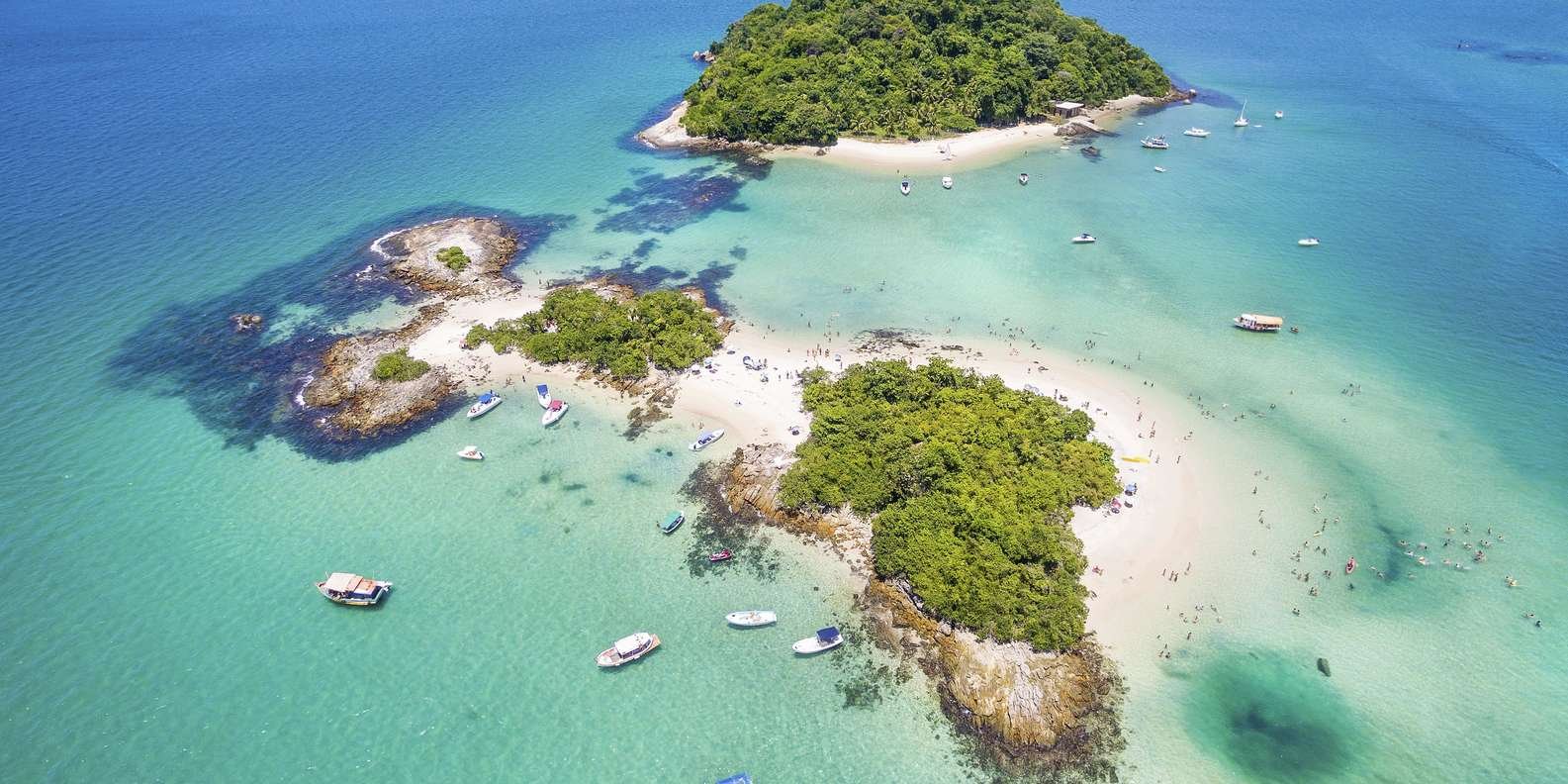
Two hours south of the city the coastline breaks apart into an archipelago. Angra dos Reis holds around 365 islands. The bay at Paraty holds more than 300. Between them sits Ilha Grande, where there are no cars. The water is protected, the distances between anchorages are short, and the beaches at the far end of it are reachable only by boat.
Most visitors experience this as a day trip. They leave a marina in the morning, see three or four anchorages, and are back at the dock by six. It is a good day.
An overnight charter is a different product entirely. You do not visit the islands. You sleep among them. The boat becomes the accommodation, the anchorage changes while you sleep, and the beaches that a day trip cannot physically reach become the ones you wake up next to.
Mèrola Luxury has arranged charters along this coast since 2015. This guide covers what an overnight charter involves, the vessels, routes, crew, costs and questions first-time charterers ask before committing.
- Three days and two nights work well for Angra dos Reis and Ilha Grande; four days and three nights allow Paraty and Saco do Mamanguá.
- We recommend boarding in Angra. Departure from Rio involves open-sea navigation and depends more heavily on weather and sea conditions.
- Daily yacht rates start at US$16,000, plus a 30% Advance Provisioning Allowance (APA). The written quote sets out inclusions and any additional costs.
Day Charter or Overnight: The Real Difference
The distinction is not simply more hours on a boat. It is a change of category.
What the overnight adds. Access, first of all. Several of the finest anchorages in Angra and around Ilha Grande sit too far from any marina to be worth a day trip, which is precisely why they stay empty. On a multi day charter they are simply where you happen to be at four in the afternoon.
Then the rhythm. A day charter compresses everything into seven or eight hours and you feel it. Over two or three days the pace changes completely: wake, swim, long lunch, sleep in the afternoon, watch the sun go down from the deck, dinner aboard, and the only sound after that is water against the hull.
And the ending. A day charter ends at a dock with a transfer back to a hotel. An overnight evening begins with the anchor going down in a sheltered bay, which is the part clients describe when they get home.
What you give up. Flexibility of logistics, mainly. On a day charter you return to your hotel each evening and the rest of the trip continues around it. On an overnight charter you are committed to the vessel and to the group for the duration. For most parties that is the point. For some it is not, and it is worth being honest about which you are.
Merola’s assessment: according to Merola Luxury, the clearest signal is the group. Couples, families and groups of friends who came to Brazil specifically to be together get more from the overnight. A party that is in Rio for several other reasons and wants a day on the water is better served by the day charter, and we say so rather than upselling.
For travelers with about a week in Brazil, the combination is especially compelling: time in Rio, followed by two or three nights at sea. You see the city and then reach a quieter side of Brazil that a hotel stay or a one-day outing cannot provide. In Mèrola’s view, the Costa Verde is Brazil’s strongest setting for a private luxury yacht stay.
The Questions First-Time Charterers Actually Ask
These come up before every first charter and almost never after one. They are worth answering properly, because they are the reason otherwise enthusiastic groups book a day trip instead.
What if I get seasick?
The waters of Angra dos Reis and Paraty are protected by the geography of the bay and by hundreds of islands. The recommended Angra embarkation keeps most of the itinerary in more protected waters; departures from Rio are a different proposition because the coastal passage includes open sea. On the overnight legs the vessel is at anchor rather than under way, and the motion in a sheltered anchorage is slow and regular rather than sharp.
Beyond that, the practical measures are well established: choose a cabin low and towards the middle of the vessel rather than in the bow, stay on deck with the horizon in view during navigation, and take preventative medication before departure rather than after symptoms start. Most people who are apprehensive find the second day easier than the first.
Will the cabin feel small?
On a vessel in the range Merola charters, guest cabins are comparable to a compact boutique hotel room, with air conditioning, natural light and a private bathroom. They are not the cabins people imagine from smaller sailing boats.
In practice guests spend very little waking time in the cabin. The deck, the salon, the shaded lounge and the swim platform are where the day happens.
Do we share the boat with the crew?
You share the vessel. You do not share the space. On the vessels proposed for your trip, we will confirm the crew and guest layout before booking, including separate crew quarters and ensuite guest cabins. Crew appear for service, for meals, for the tender and for navigation, and withdraw when they are not needed. Good crew are close to invisible until the moment you want something.
What if I want to be alone?
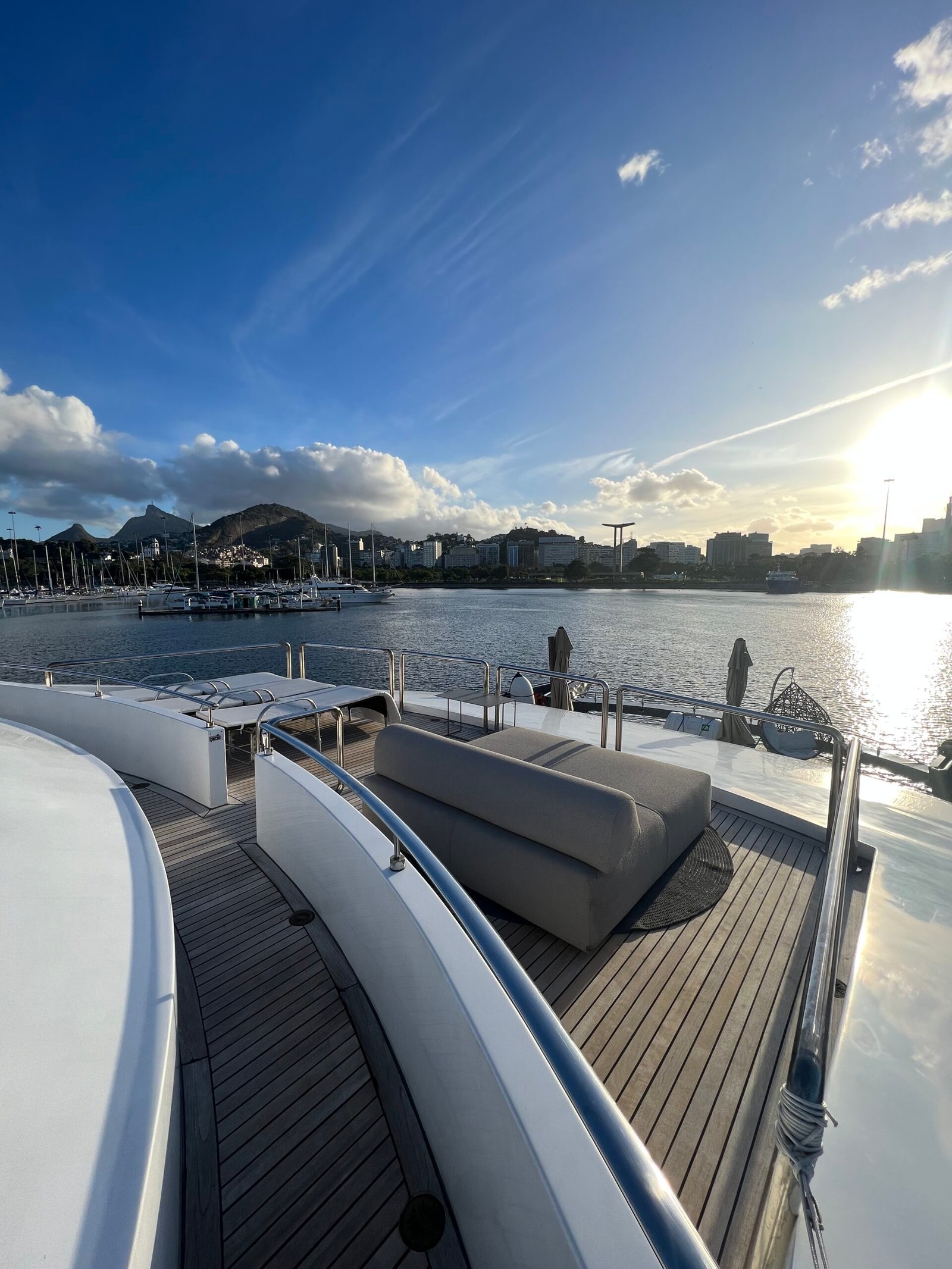
A vessel has more separate spaces than people expect. Foredeck, aft deck, flybridge, interior salon, swim platform. It is entirely normal for one guest to be reading in one place while three others are in the water. And there is always the tender, which can put you on a beach for two hours by yourself.
Is the bathroom going to be a problem?
We will confirm the bathroom configuration of your specific vessel; the guest cabins proposed for an overnight itinerary should have private bathrooms with a shower, basin and toilet. Water pressure and hot water are consistent on a well maintained vessel. The only meaningful difference from a hotel is that fresh water is finite, so the convention is efficient showers rather than long ones.
Will I actually sleep?
Most guests sleep better at anchor than they expected, and often better than in a city hotel. The movement is gentle and constant, there is no traffic, and it is genuinely dark. The first night is the adjustment. By the second, it is usually the part people miss afterwards.
Will we get bored?
Two or three days is short. A typical day includes navigation between anchorages, swimming, snorkelling, water toys, a beach, lunch somewhere, and time doing nothing at all, which for most guests turns out to be the point. The captain adjusts the route to the group rather than running a fixed programme.
According to Merola Luxury, the question that appears most often before a first charter is about sharing space with crew, and it is the one that never appears again. Once guests understand the layout, the concern disappears within an hour of boarding.
The Cruising Ground: Angra dos Reis, Ilha Grande and Paraty
This stretch of coast, known as the Costa Verde, is the most established cruising ground in Brazil and one of the better ones anywhere.
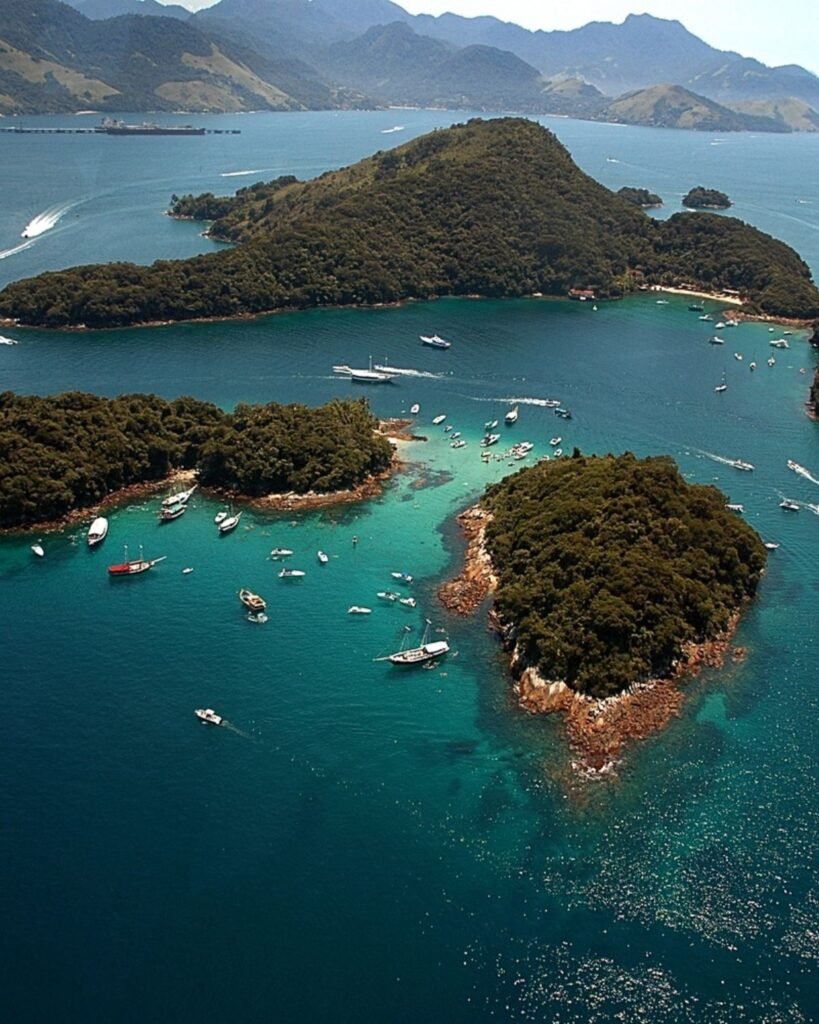
Angra dos Reis. Around 365 islands across a protected bay, with emerald water and anchorages that range from busy to entirely empty depending on how far you are willing to go. The geography rewards multi day charters specifically, because the best of it is at the far end.
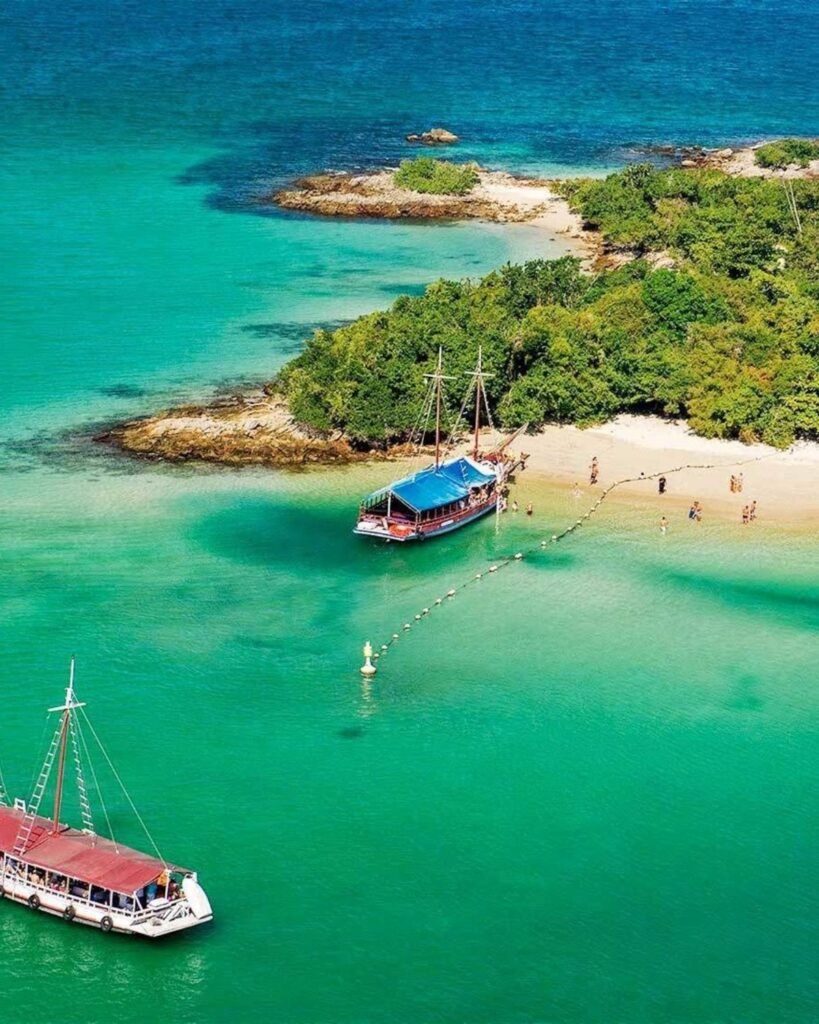
Ilha Grande. A large island with no cars, protected as a state park, and home to Lopes Mendes, which appears on most lists of the best beaches in Brazil and is reachable by boat or by a long walk. Sheltered anchorages on the northern side, wilder beaches on the ocean side.
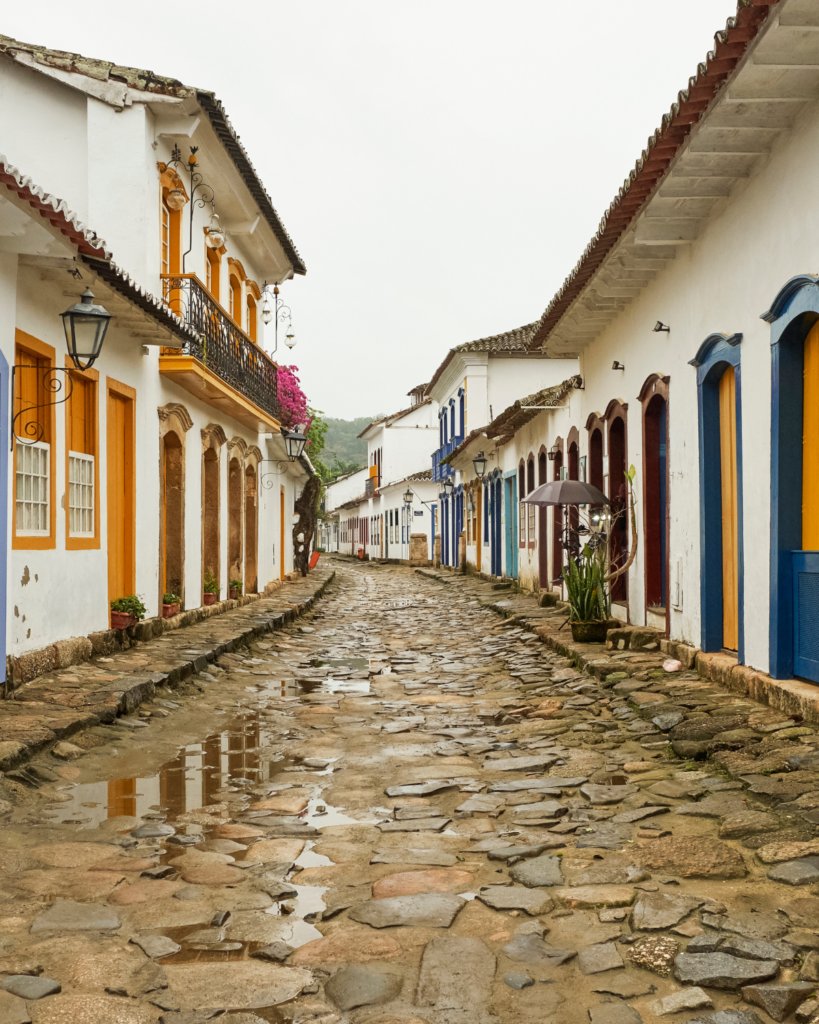
Paraty. A UNESCO listed colonial town at the southern end, with more than 300 islands in its bay. Cobblestone streets, colonial churches, galleries and restaurants, and a bay that is calmer than Angra and less travelled.
The Saco do Mamanguá, near Paraty, adds a dramatic inlet framed by forested mountains to a four-day itinerary. Subject to the final route and advance arrangements, a visit to a marine farm cultivating oysters and scallops can become one of the charter’s culinary highlights: a chef-led tasting paired with selected wines or caipirinhas made with local tropical fruit.
Named anchorages a multi day route would typically include: Lagoa Azul and Ilha Botinas for snorkelling, Ilha da Gipóia for a stop, Lopes Mendes and Enseada das Palmas on Ilha Grande, Aventureiro and Araçatiba further out.
How it compares to the Caribbean and the Mediterranean
The similarities are real. Protected water, short distances between anchorages, hundreds of islands, and the same rhythm of moving an hour and stopping for the afternoon. Anyone who has chartered in the British Virgin Islands or the Greek islands will recognise the format immediately.
The differences are worth stating honestly. Marina infrastructure here is less developed than in the Caribbean or Croatia. There are fewer island restaurants and more informal waterfront restaurants and floating dining options, which some guests prefer and some do not. And parts of the region carry environmental protections that restrict anchoring and some water activities, particularly around Paraty.
Merola’s assessment: Merola Luxury regards the lower density of development as the reason to come rather than a limitation. According to Merola, an anchorage in Angra on a Tuesday in October is emptier than anything comparable in the Mediterranean in season, and clients who have chartered elsewhere notice that within the first afternoon.
Mèrola Signature by the Sea: Three Ways to Charter
Routes are designed around the group and adjusted by the captain for wind, sea state, local restrictions and available anchorages. The following are starting points, not fixed promises of a particular landing or activity.
The Island Escape — 3 full days, 2 nights
For a couple, family or group of friends seeking beaches, snorkeling, water toys, a Brazilian barbecue, sunset on deck and privacy. The route follows Angra dos Reis → Ilha Grande → secluded beaches → Frade/Angra.
- Day one: Board in Angra. Swim and snorkel around the islands as conditions allow, then continue to a sheltered anchorage near Ilha Grande for dinner and the first night aboard.
- Day two: Spend a full day around Ilha Grande, with beaches, water toys and time on deck. A Brazilian barbecue can be planned with the chef before anchoring for a second night.
- Day three: A slower morning, one final anchorage or swim, then cruise toward Frade or Angra for disembarkation.
The Brazilian Riviera — 4 days, 3 nights
A more social and varied route for travelers combining Rio with Angra and Paraty. Angra → Ilha Grande → Frade → Paraty and the Saco do Mamanguá, with beach time, gastronomy, sunset drinks and, if desired, golf ashore. Exact sequencing and departure port depend on the vessel and conditions.
- Day one: Board in Angra and settle into the yacht with the first island stops and an overnight anchorage.
- Day two: Explore Ilha Grande, then continue toward the Frade area. A golf round ashore can be arranged if it fits the confirmed route and availability.
- Day three: Cruise toward Paraty and the Saco do Mamanguá. Arrange a visit to an oyster and scallop marine farm where available, followed by a chef-led tasting with wine or tropical-fruit caipirinhas.
- Day four: Enjoy the bay and, if desired, the historic center of Paraty before disembarkation at the port agreed for your trip.
The Ultimate Private Escape — 4 days, 3 nights
The most tailored option for travelers who want the vessel to anchor a private journey. Build the four days around a helicopter arrival or departure, private chef, secluded beach, private-island experience, fishing where permitted, massage and wellness, Brazilian barbecue, premium wines and water toys. Include a marine-farm visit for oysters and scallops if the route and local availability allow.
A sample progression is Angra and Ilha Grande on the first two days, then the quieter bays toward Paraty and Saco do Mamanguá before departure. The captain sets the navigable route; Mèrola coordinates the services on land and aboard. Helicopter transfers, private-island access, wellness, premium wines and rented water toys are quoted according to the specific arrangements.
No crowds. Just Brazil, entirely on your terms.
Why we recommend boarding in Angra
A yacht may be able to depart from Rio de Janeiro, but the passage to the Costa Verde involves open-sea navigation. Departure is subject to weather and sea conditions, and an unfavorable forecast can alter the timing or route. Mèrola recommends a road or helicopter transfer from Rio and boarding in Angra dos Reis, where the itinerary can begin closer to the more protected island cruising ground. A Rio departure is considered only when the vessel, forecast and captain support it; it is not the default plan.
The Vessels
Availability, layouts, crew and current photographs are confirmed for your dates. The rates below are starting daily charter rates in US dollars; a 30% APA is additional, and the written proposal details what each rate covers.
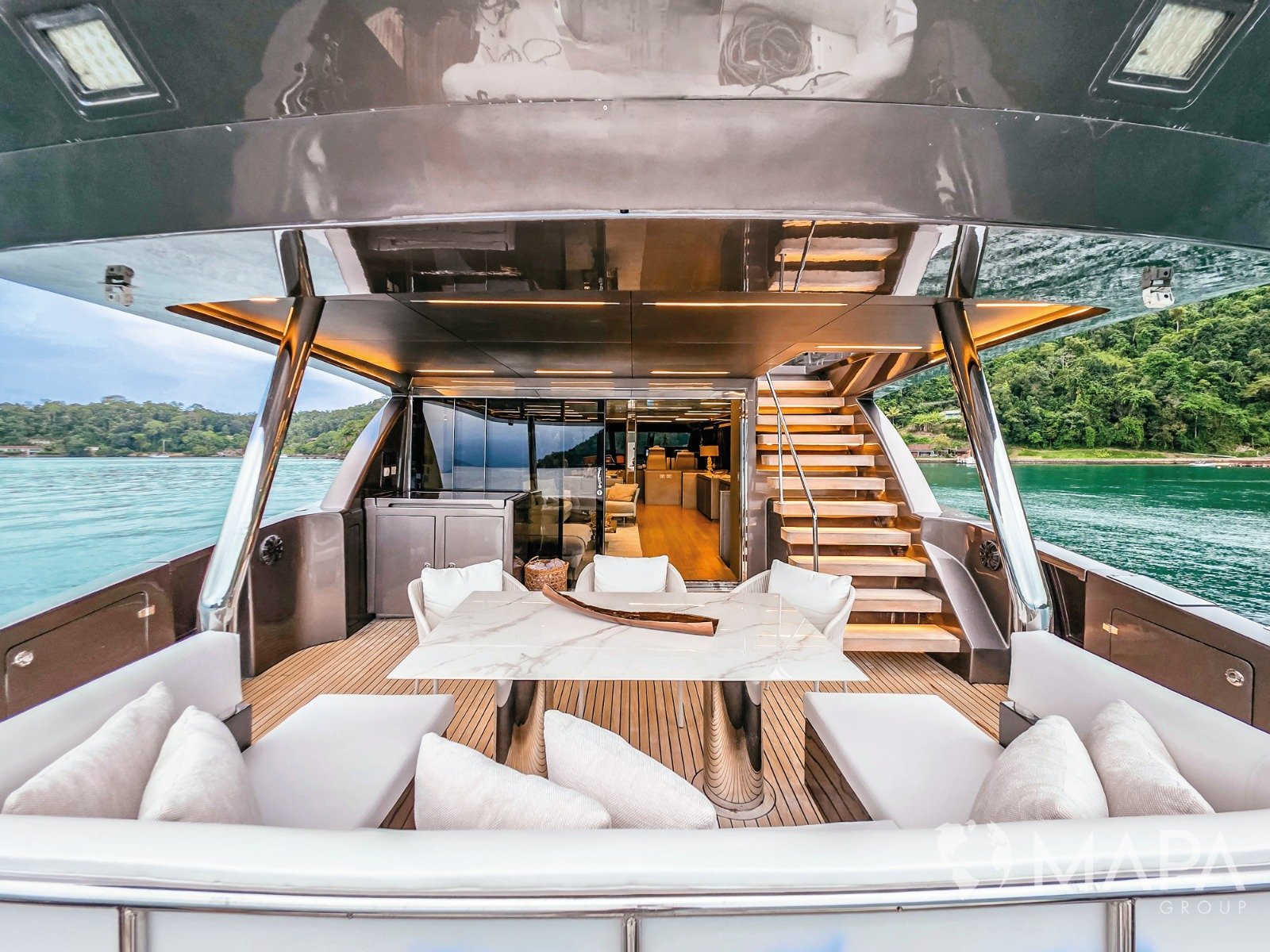
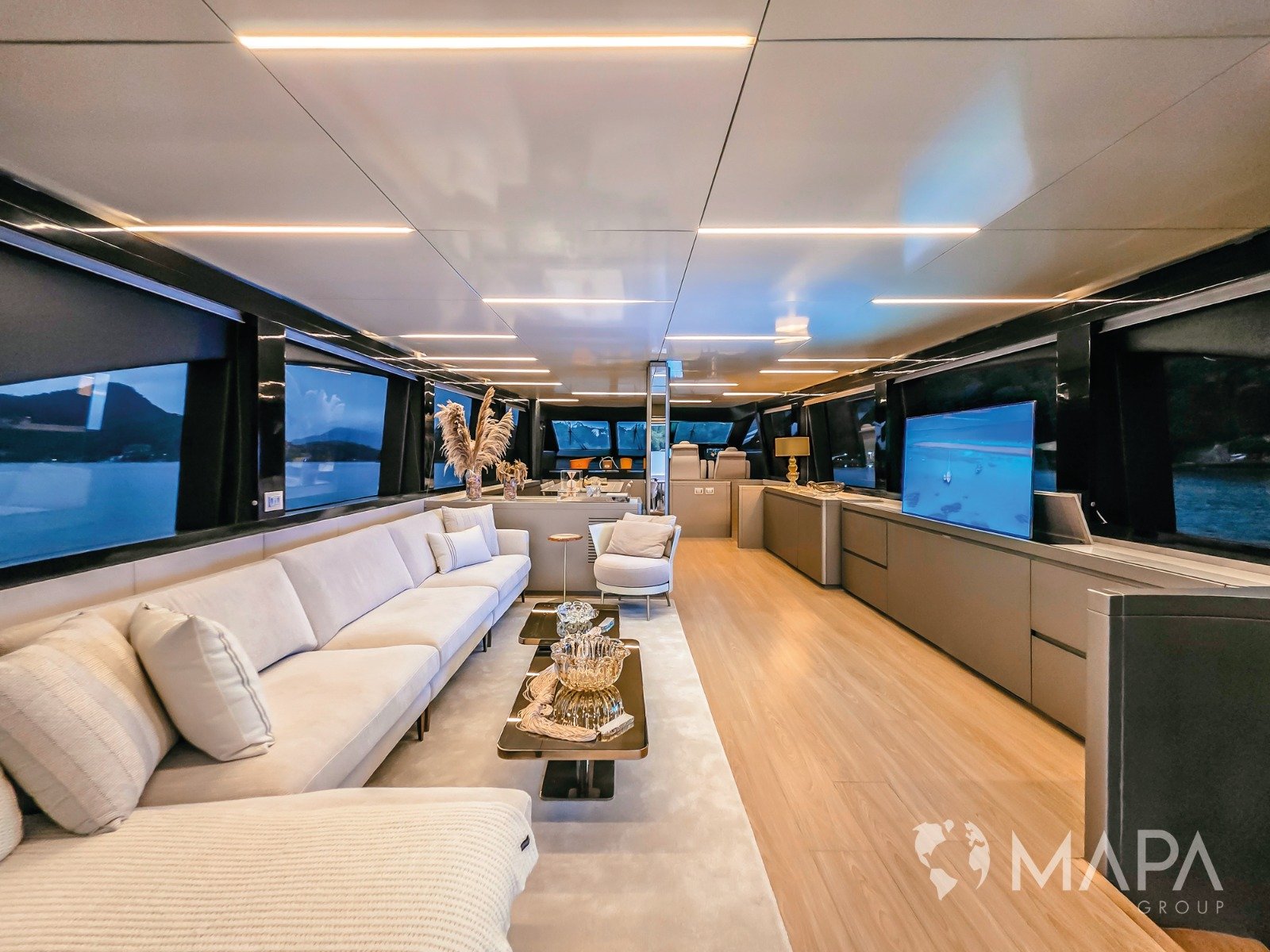
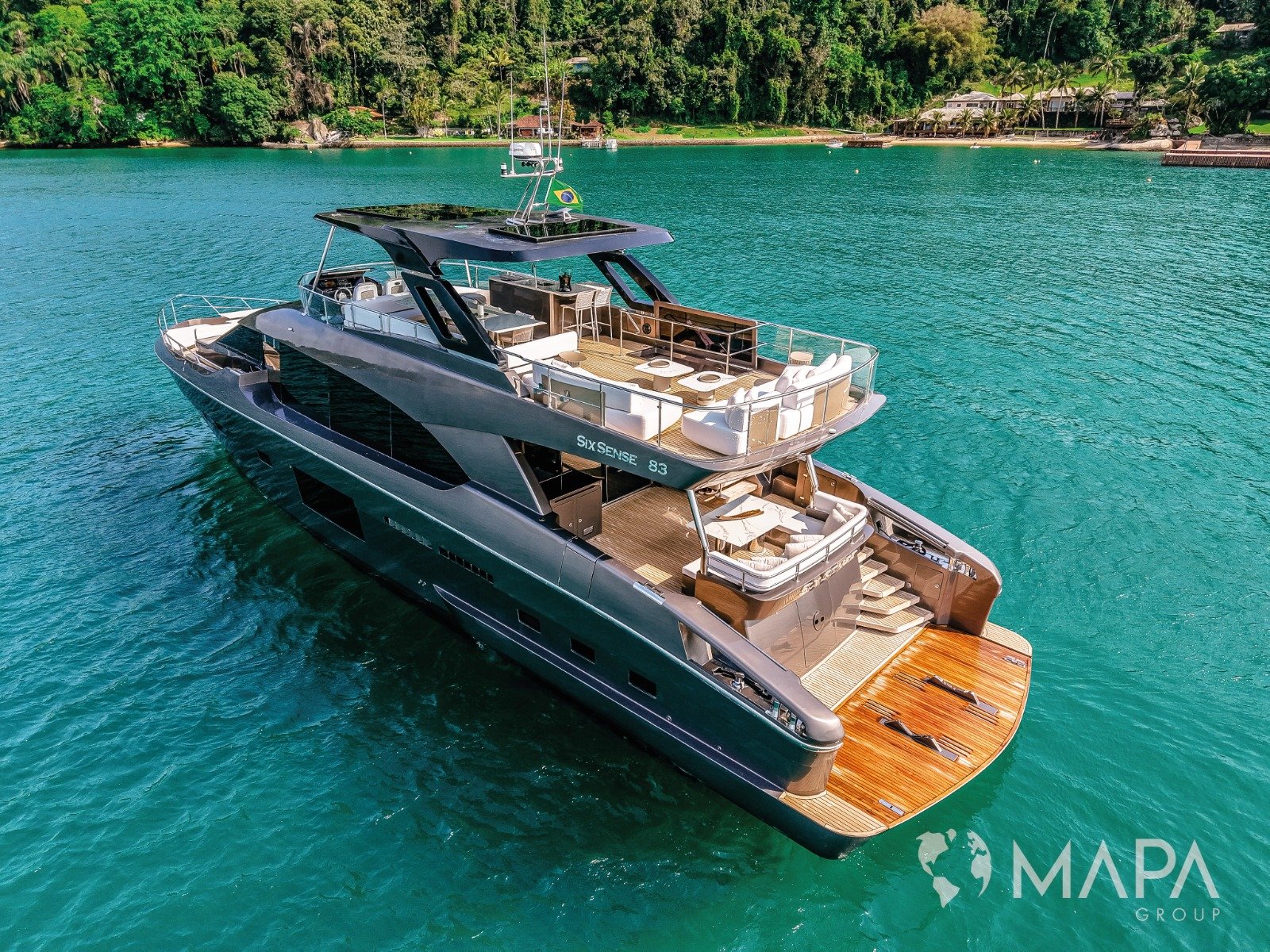
Rio Star 83′
A private motor yacht option for an overnight itinerary through Angra and Ilha Grande. We confirm the actual guest-cabin layout, amenities and crew before recommending it for your group.
From US$16,000 per day, plus 30% APA.
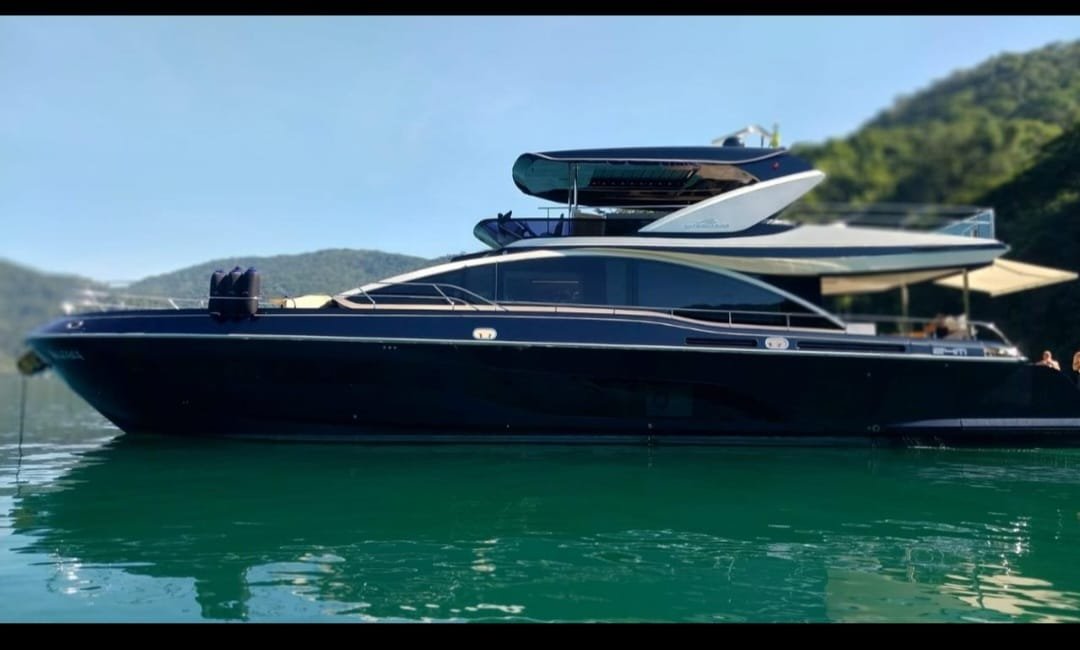
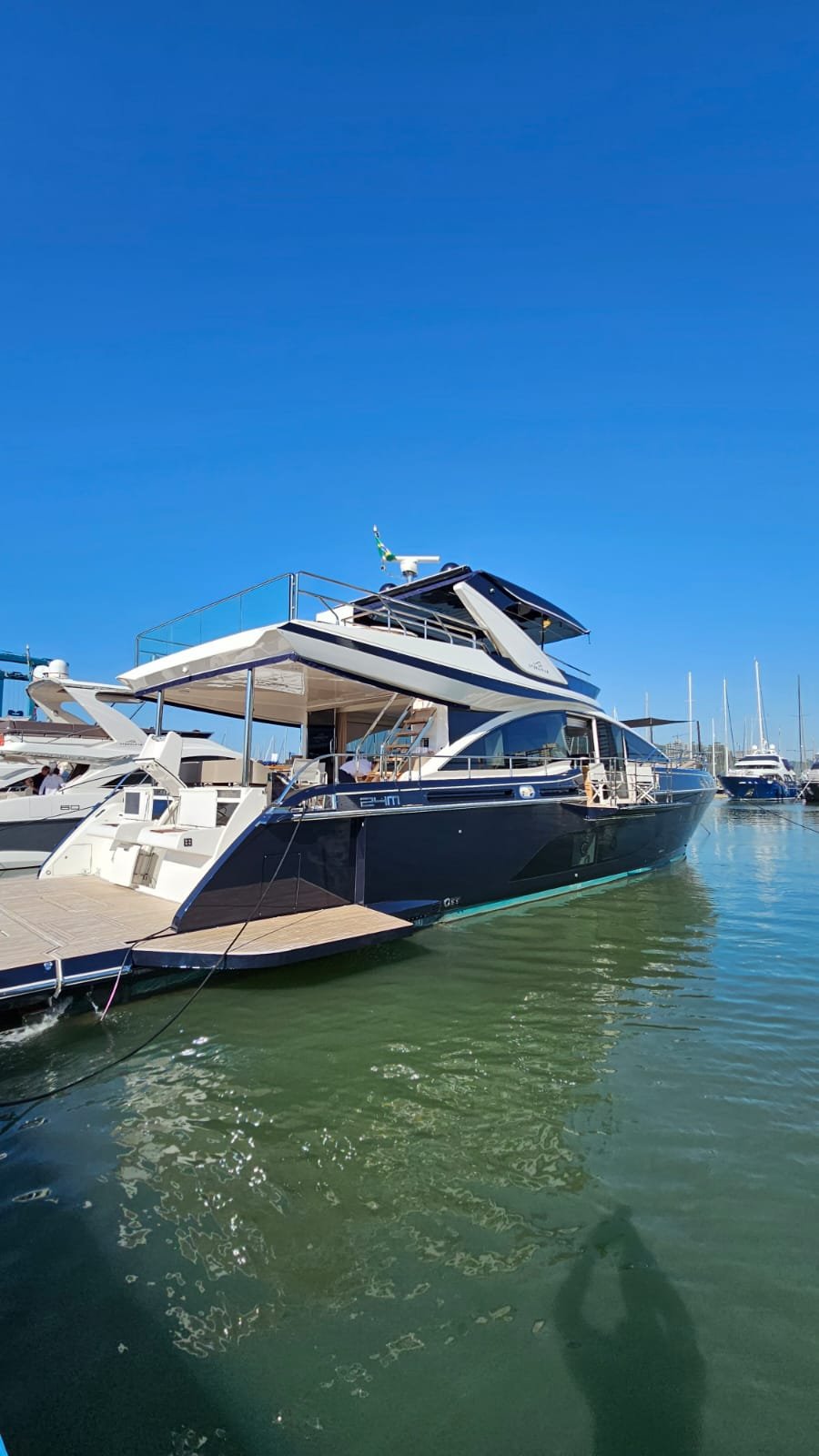
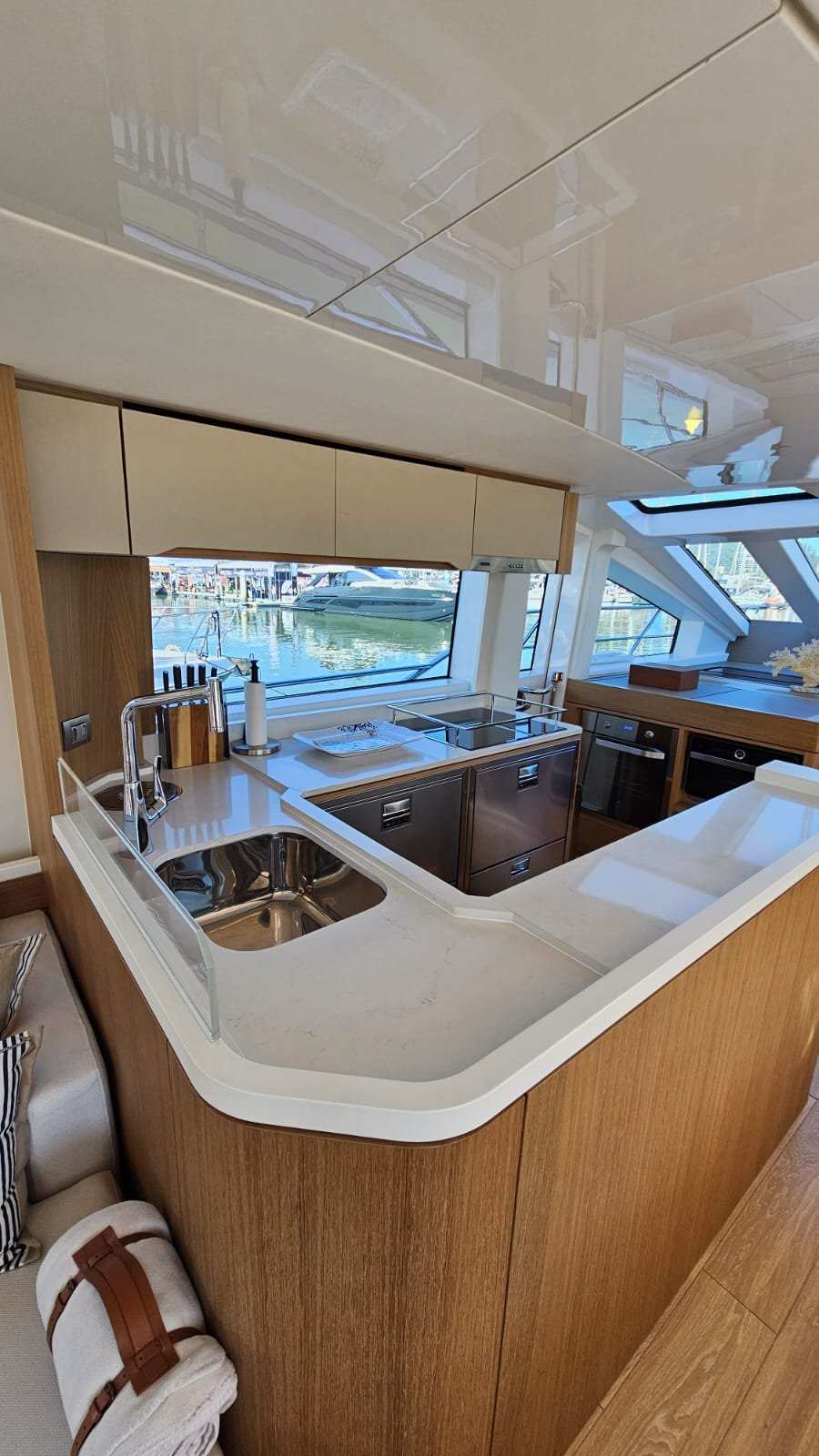
Intermarine 24M
A contemporary yacht option for the Costa Verde. We share the specific vessel’s recent photographs, cabin plan and inclusions with the quote.
From US$16,500 per day, plus 30% APA.
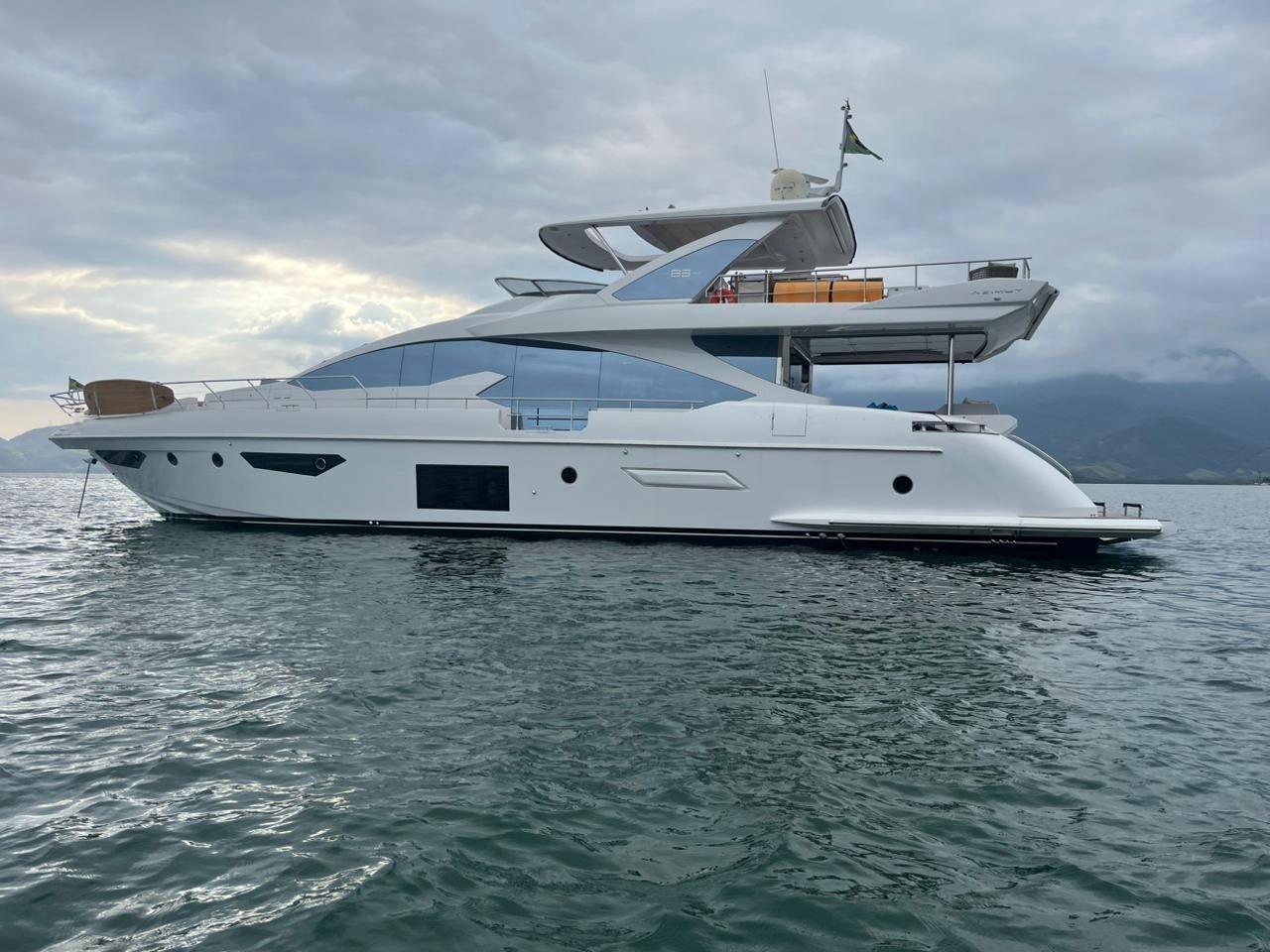
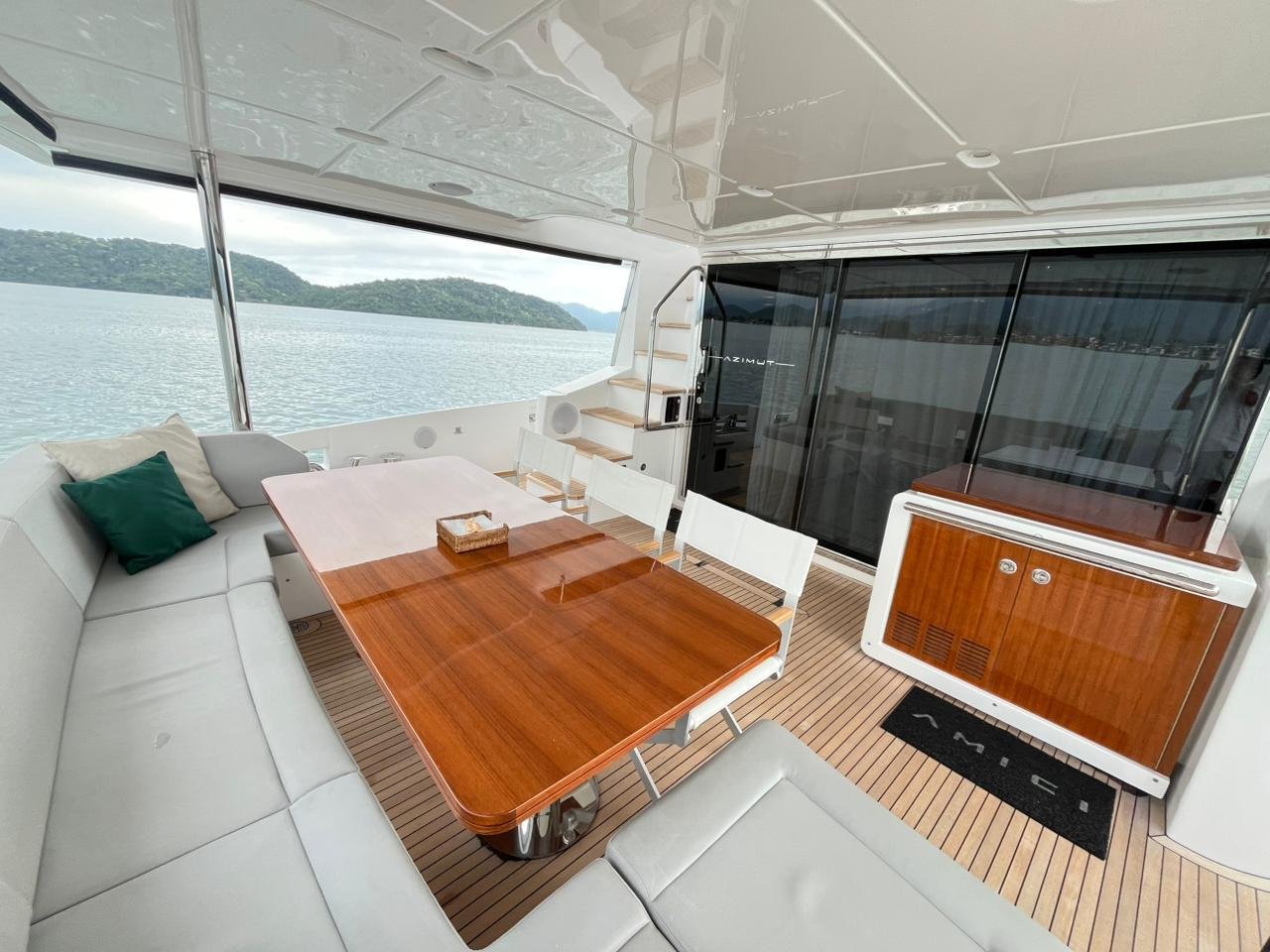
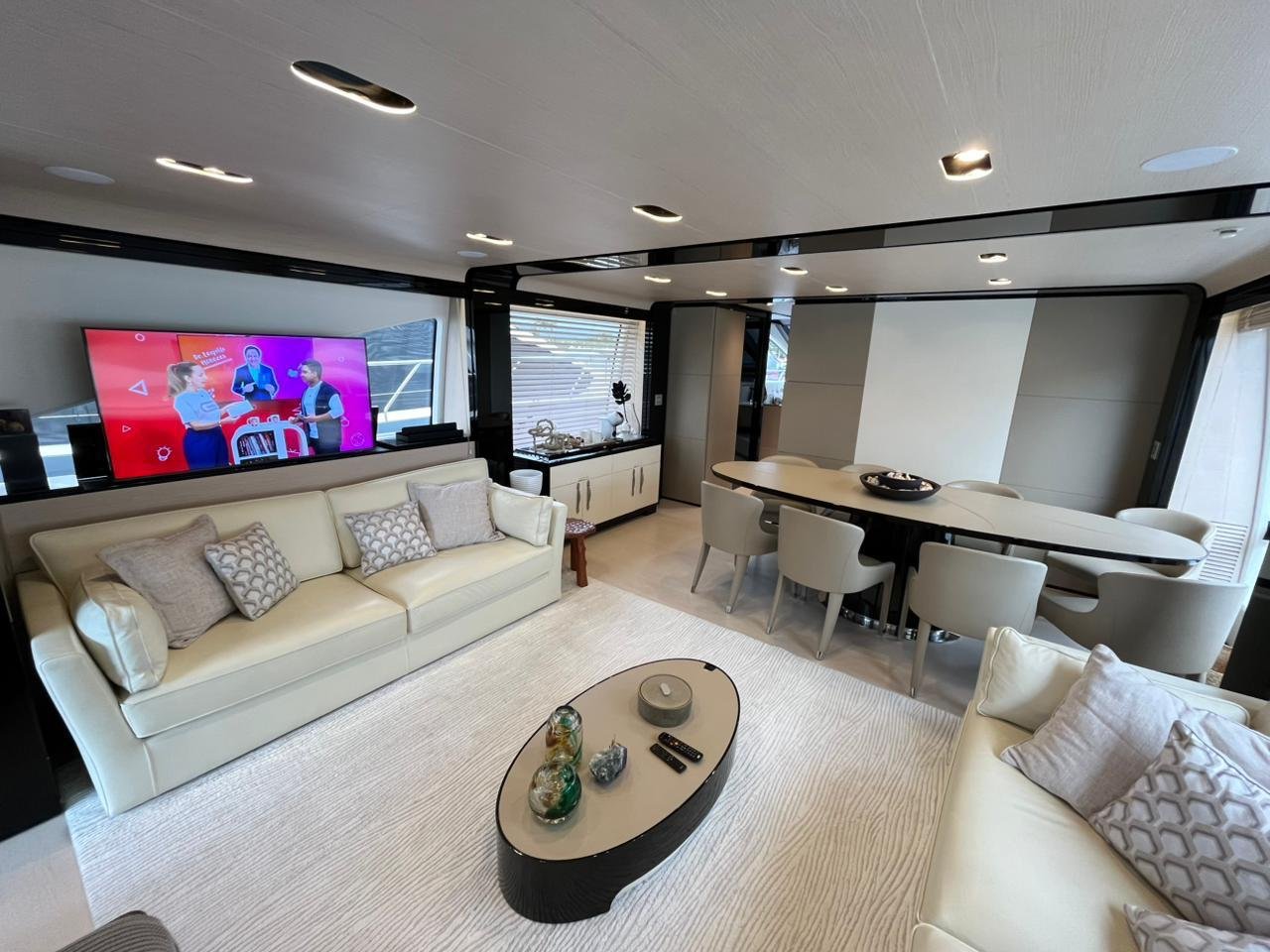
Azimut 83′
An alternative at the same starting rate, subject to availability. The vessel’s configuration, crew and inclusions are confirmed in the written proposal.
From US$16,500 per day, plus 30% APA.
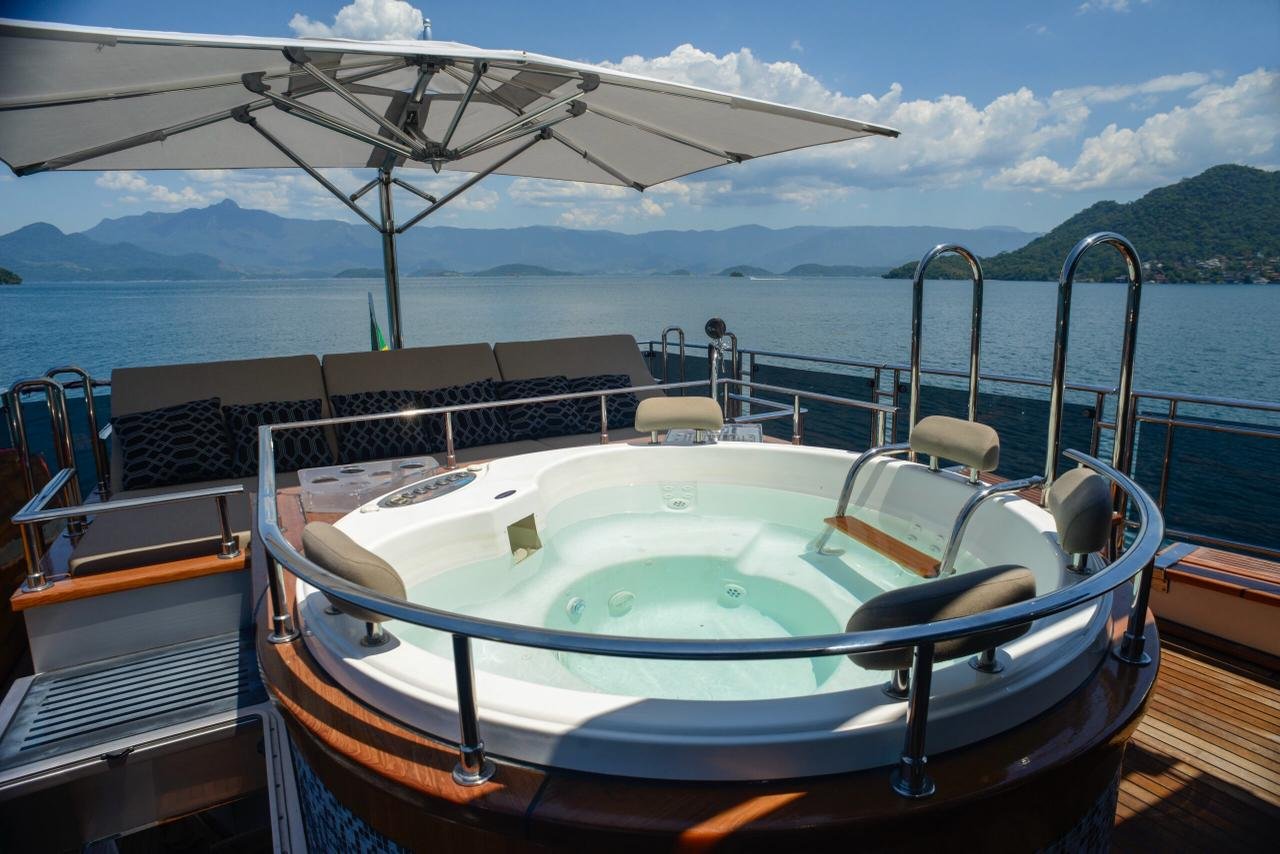
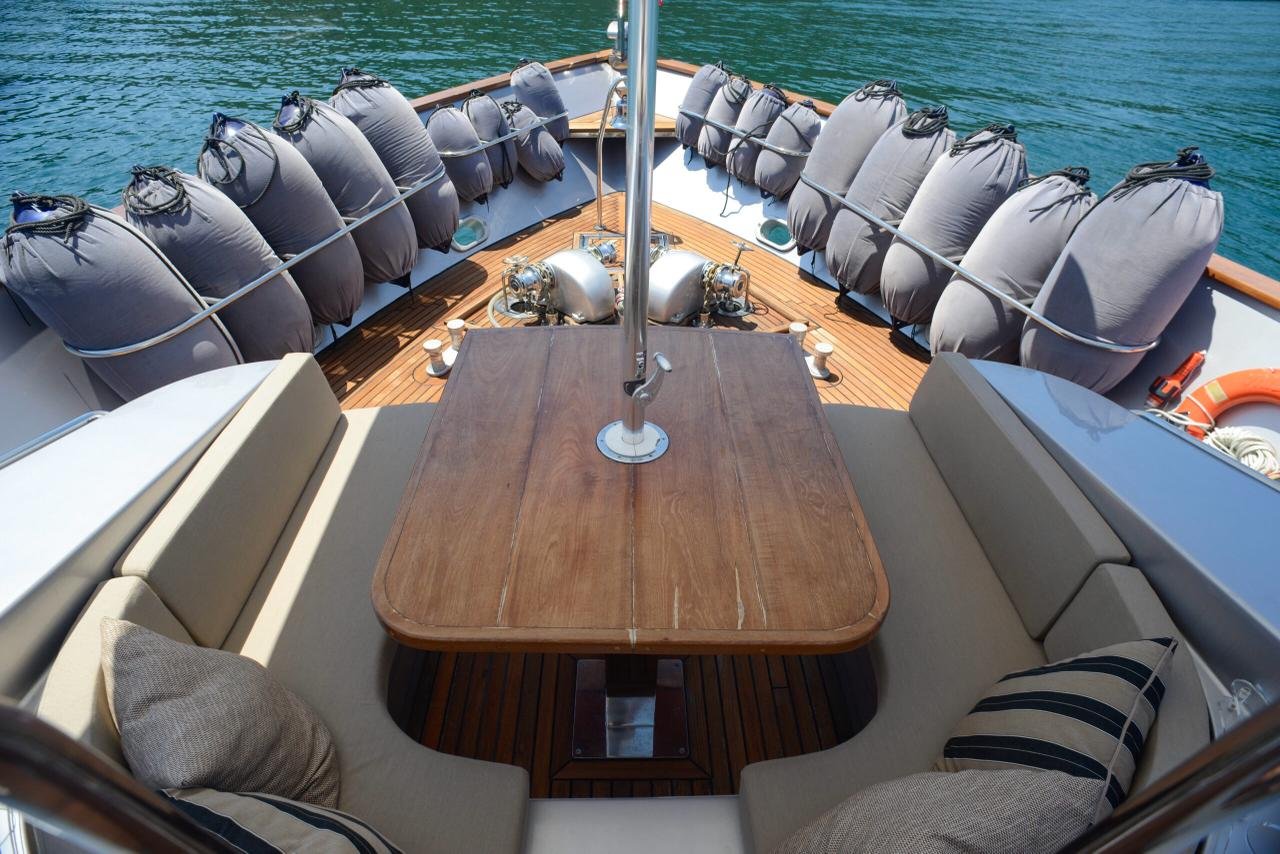
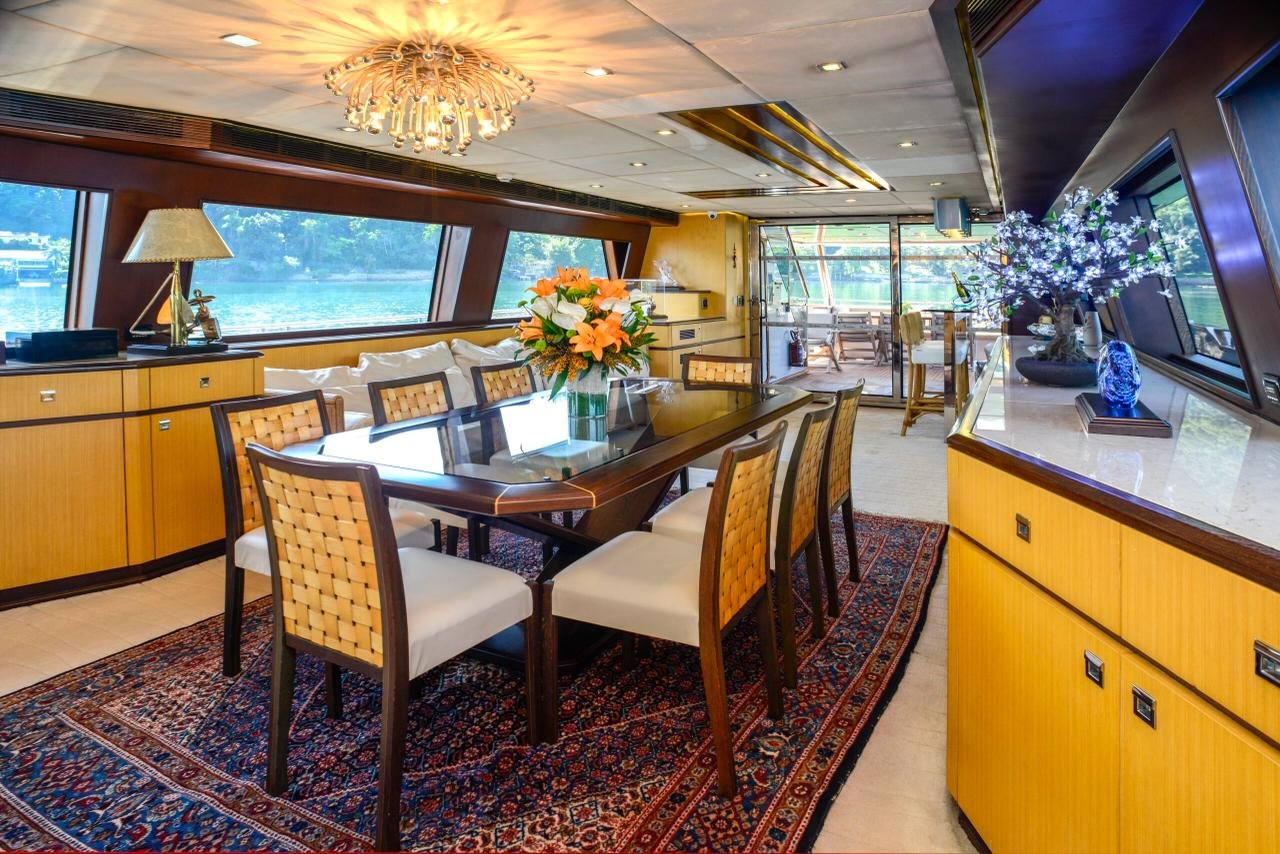
Saha 112′
A larger yacht for a group wanting more space aboard and a more substantial setting for social time and dining. The exact layout, crew and equipment are confirmed for the vessel offered.
From US$18,000 per day, plus 30% APA.
Merola’s assessment: research across the charter industry consistently finds that crew account for a larger share of how a charter is remembered than the vessel does. According to Merola Luxury, we would rather place a group on a smaller boat with a captain and chef we have worked with for years than on a larger one we do not know. Clients rarely describe the yacht afterwards. They describe the crew.
Intermarine 24M model film by NÁUTICA. The vessel offered for your dates may differ.
Watch on YouTubeHow the Pricing Works
Mèrola quotes the yacht’s daily rate and an Advance Provisioning Allowance (APA) of 30% of the charter fee. The APA is an advance budget for provisions and food, applicable local embarkation or disembarkation fees, and any agreed extra water-toy rentals such as a jet ski, Seabob or eFoil. It is charged in addition to the advertised daily rate.
The yacht and crew, the charter duration, the APA budget and all known inclusions and exclusions appear in the written proposal. Fuel, dockage, taxes, transfers, dining ashore and optional activities must be checked against that proposal for the specific vessel and itinerary; do not assume they are included. The agreement should also explain how actual APA spending is accounted for, whether an unused balance is returned and how an overage is approved.
For example, a three-day charter at a starting rate of US$16,000 per day has a base charter fee of US$48,000 and a 30% APA of US$14,400, for an initial charter budget of US$62,400 before any separately quoted items. This is an illustration, not a final quote: dates, vessel availability, route and the contracted inclusions determine the actual figure.
Crew gratuity, if offered, is discretionary. We state the payment terms and any applicable expectations in writing before you book. A first-time charterer should ask for the complete estimate, rather than comparing advertised day rates alone.
The APA structure is familiar to many guests who have chartered in the Caribbean or Mediterranean. What matters is the itemized scope and transparent accounting: you should know which expenses it funds and who authorizes additions before boarding.
Crew and Life Aboard

The crew are the reason a charter works, and the part guests know least about beforehand.
Who is aboard. A captain responsible for navigation, safety and the route. A chef. Depending on the vessel, a hostess or steward handling service and cabins, and deckhands operating the tender and the water toys. Ratios of roughly one crew member to two or three guests are typical at this size.
Meals. Before the charter, guests complete a preference sheet covering tastes, restrictions and allergies, and the chef builds the menus from it. Breakfast is late and slow, lunch is usually at anchor, dinner is aboard or occasionally ashore depending on the route. A meal ashore can instead be arranged at a floating restaurant or a restaurant on an island along the confirmed route, subject to availability. A planned visit to an oyster and scallop marine farm can bring local producers into a chef-led tasting, paired with wine or tropical-fruit caipirinhas.
The shape of a day. Breakfast. A short navigation to the next anchorage. Swimming, snorkelling and the toys through the middle of the day. Lunch. The afternoon does whatever the group wants it to do. Sunset from the deck. Dinner. Then quiet.
Weather. Navigation decisions belong to the captain. In poor conditions the route shifts to more protected anchorages and less time under way. Within the Angra and Paraty cruising areas there are more sheltered options, although no specific stop or transfer is guaranteed in poor conditions.
Season and Booking
High season runs December to March, the southern hemisphere summer, with the peak at New Year and Carnival. Warmest water, longest days, and the busiest anchorages.
The shoulder months are the ones we recommend most often. October, November, March, April and May give warm water, settled weather and considerably emptier anchorages. For a charter specifically, as opposed to a beach holiday, this is the better trade.
Lead times. For New Year and Carnival, six months or more. For the rest of high season, three to six months. Outside those windows, one to three months is usually workable. Merola recommends securing the charter at the same time as accommodation rather than after it, because vessel inventory on this coast is genuinely limited.
Getting to the Boat
By helicopter. Rio de Janeiro to Angra dos Reis takes roughly 35 minutes against two and a half to three hours by road. Merola coordinates helicopter transfers directly to the departure point, which turns the transfer itself into an aerial view of the coastline you are about to sail.
By road. Two and a half to three hours from Rio to Angra by executive vehicle with a bilingual driver, or around four hours to Paraty. The road along the Costa Verde is scenic in its own right.
Departure points. We recommend Angra dos Reis for most overnight charters. Paraty can suit an itinerary planned around the southern end. A departure from Rio may be possible but involves open-sea navigation and depends on weather, sea conditions, the specific vessel and the captain’s decision. We do not recommend relying on it as the standard embarkation point.
Returning. Charters are timed to return with enough margin before an international departure from Rio. Merola coordinates the transfer back and, where the schedule is tight, arranges the return by air.
What to Ask Before You Book Any Charter
Whether you charter with us or with anyone else, these are the questions worth asking.
- What is the complete estimated amount for my dates, including the daily rate, 30% APA, and any known exclusions?
- What precisely does the APA cover, how are expenses documented, and what happens to a remaining balance or an overage?
- Are fuel, dockage, taxes, transfers, water toys and dining ashore included or charged separately?
- Can I see current photographs and a cabin plan for the actual vessel being offered?
- Who is the crew and how long have they operated this vessel?
- What is the weather policy, especially if the proposal departs from Rio through open sea?
- Who is my named contact during the charter if something is wrong?
Frequently Asked Questions
What is an overnight yacht charter in Brazil?
A private yacht charter with a professional crew where guests sleep aboard rather than returning to a marina each evening. Mèrola’s core options are three full days and two nights around Angra and Ilha Grande, or four days and three nights extending toward Paraty and Saco do Mamanguá.
How is it different from a day charter?
A day charter visits the islands. An overnight charter sleeps among them. The practical difference is access, because several of the best anchorages are too far from any marina for a day trip, and rhythm, because two or three days allows a pace that seven hours cannot. Merola’s view is that groups who came to Brazil specifically to be together get more from the overnight, and groups who want one good day on the water are better served by the day charter.
How does the pricing work?
The daily rates start at US$16,000 for Rio Star 83′, US$16,500 for an Intermarine 24M or Azimut 83′, and US$18,000 for Saha 112′. A 30% Advance Provisioning Allowance is additional for provisions and food, applicable local embarkation or disembarkation fees and agreed extra water-toy rentals. The quote and contract identify other inclusions, exclusions and how APA spending is accounted for.
Will I get seasick?
Angra and Paraty offer more protected island cruising than the open-sea passage from Rio, which is one reason we recommend embarking in Angra. Overnight the vessel normally anchors in a sheltered location chosen by the captain. If you are susceptible to motion sickness, ask your clinician or pharmacist about appropriate prevention before travel; the captain can also discuss the route and cabin placement.
Do we share space with the crew?
The crew and guests share the vessel, but service and sleeping areas are distinct on suitable overnight yachts. We confirm the exact crew and guest layout for the vessel proposed before booking.
How many nights should we book?
Two nights and three full days suit Angra and Ilha Grande. Three nights and four days allow a wider route toward Paraty and Saco do Mamanguá, with more room for gastronomy or an oyster and scallop marine-farm visit where available.
When is the best time of year?
December to March is the southern hemisphere summer, with the warmest water and the busiest anchorages. Merola more often recommends the shoulder months of October, November, March, April and May, which give warm water, settled conditions and considerably emptier anchorages. For a charter specifically, that is usually the better trade.
How do we get to the boat from Rio?
Transfer by road or helicopter to Angra, then board there. The helicopter journey is roughly 35 minutes in suitable conditions; the road transfer usually takes around two and a half to three hours. A yacht departure from Rio is possible only if the vessel, forecast and captain permit the open-sea passage, so we recommend Angra embarkation for a more reliable itinerary.
How far in advance should we book?
Six months or more for New Year and Carnival. Three to six months for the rest of high season. One to three months outside those windows. Merola recommends securing the charter alongside accommodation rather than after it, because vessel inventory on this coast is limited.
Arrange a Charter
Tell us your dates, group size, preferred vessel and whether you have three days and two nights or four days and three nights. If Rio is one part of a longer Brazil trip, tell us the other destinations too. We will propose the yacht, the embarkation point, a route and an itemized estimate with the daily rate, 30% APA and any separately quoted services.
If the dates do not work for the vessel you want, we will say so rather than putting you on something else and hoping.
Merola Luxury is headquartered in Rio de Janeiro and has arranged charters along the Costa Verde since 2015. Available on WhatsApp in English, Portuguese and Spanish.
Mèrola Signature by the Sea
Brazil, Entirely on Your Terms
Pair Rio with a private journey through the islands of the Costa Verde.
Design Your Journey