
How Much Does a Luxury Trip to Brazil Cost?
A Rio concierge breaks it down
Almost nobody asks this question on its own. In fifteen years of enquiries, the version that actually arrives reads more like this: ten days, two adults, three destinations, helicopter between them, a villa in Trancoso. What range are we talking about?
That is the right way to ask it, because the answer depends almost entirely on how the trip is built rather than on where it goes. Two couples can spend a fortnight in Brazil, stay in comparable properties, eat at the same restaurants, and separate by a factor of three on the final number. The difference is rarely the hotel. It is the aviation, the group size, the number of destinations and the dates.
- For two travellers, the guide begins at US$15,000–25,000 for seven nights, excluding international airfare.
- Accommodation and domestic movement usually shape the total more than the destination name.
- Mèrola does not apply one standard DMC fee to every journey.
This guide sets out what a high end trip to Brazil actually costs: where the money goes as a percentage, realistic ranges by component, what changes concretely between budget tiers, what you give up when you cut, and how concierge fees work in this market. Merola Luxury has operated in Rio de Janeiro since 2016 and has designed itineraries for more than 2,500 international clients. The figures below reflect what we see in the market and what we pay on behalf of clients.
Every number here is a range. Anyone quoting you a fixed figure before knowing your group size, your dates and your route is quoting a package rather than a trip.
The Short Answer
For two travellers, excluding international airfare, at a genuinely high standard:
US$15,000 to US$25,000. Commercial domestic flights, five star hotels, private guiding, some exclusive tours/experiences.
US$25,000 to US$50,000. The most common configuration. Adds helicopter transfers and either a villa or a yacht component.
From US$50,000. Private aviation on the longer legs, villa with staff, multi day yacht charter.
Above that range sits a tier where international private aviation, exclusive villa buyouts and full week yacht charters push a fortnight past US$150,000. Below it, the trip stops being what this article is describing.
Merola's assessment: the figure clients most often arrive with is lower than the figure the itinerary they described actually requires, and the gap is almost always domestic aviation. According to Merola Luxury, the single most useful thing a first time visitor to Brazil can do is separate the international flight from everything else in their mental budget, because the two behave completely differently.
Where the Money Actually Goes
Affluent travellers tend to think in percentages rather than in line items, and the allocation is fairly consistent across Brazil itineraries.
Accommodation: roughly 30 to 40 percent. The largest single category on almost every trip, and the one clients estimate most accurately before they start.
Domestic aviation and ground movement: roughly 20 to 30 percent. The category that decides the final number, and the one clients consistently underestimate. On an itinerary with three or four destinations, moving between them can cost as much as sleeping in them.
Experiences, guiding and dining: roughly 20 to 30 percent. Yacht days, private guides, Michelin reservations, chef at the villa, cultural access.
Concierge and coordination: The cost depends on the itinerary and scope of support. It may be shown separately or included in the quoted services; there is no standard percentage for every Mèrola client. Covered in detail below.
International airfare sits outside this entirely. Business class from New York or London to Rio runs roughly US$4,000 to US$9,000 per person return depending on season and booking window, and first class considerably above that. Most clients book it themselves or through their own arrangements, and we plan around it.
According to Merola Luxury, if a proposal you receive does not make the aviation line visible, ask for it. It is where the number moves, and an operator who buries it inside a total is either not thinking about it carefully or does not want you to.
What Each Component Costs
Ranges below are what we see in the market in 2026. All are subject to season, availability and the specific property or vessel. Currency moves: the Brazilian real has traded roughly between 5.0 and 5.9 to the dollar over the past three years, and a half point swing moves locally priced components by around ten percent for a dollar buyer.
Accommodation, cost per night
Luxury hotel, Rio or São Paulo: US$500 to US$1,800. Copacabana Palace, Fasano, Janeiro, Fairmont, Rosewood, Palácio Tangará. Premium suites and Carnival or New Year dates run well above.
Private villa with staff, Rio: US$1,500 to US$5,000. Joá, São Conrado, Barra da Tijuca, Santa Teresa. Includes household staff. Chef, groceries and additional services are separate.
Trancoso villa, weekly: US$16,000 to US$50,000. Five bedroom range in high season. New Year dates are a different market entirely.
Fernando de Noronha: US$800 to US$1,500. Plus the island environmental charge and national park fee, which are per person and often forgotten.
Amazon lodge, per person: US$1,200 to US$2,500. All inclusive, including guiding and excursions.

Movement
Executive vehicle with bilingual driver: US$250 to US$500 per day. Rio or São Paulo, full day at disposal.
Private guide, bilingual: US$400 to US$600 per day. Specialist and naturalist guiding sits at the upper end.
Helicopter, Rio to Angra dos Reis: US$2,000 to US$7,000 per leg. 35 minutes against roughly three hours by road.
Helicopter, Porto Seguro to Trancoso: US$1,400 to US$3,000 per leg. 15 minutes against roughly two hours by road.
Private jet, domestic legs: US$8,000 to US$30,000 per leg. São Paulo to Rio, São Paulo to Iguazu, Rio to Trancoso, Rio to Salvador, Rio to Florianópolis. Aircraft type and positioning drive the range.
On the water
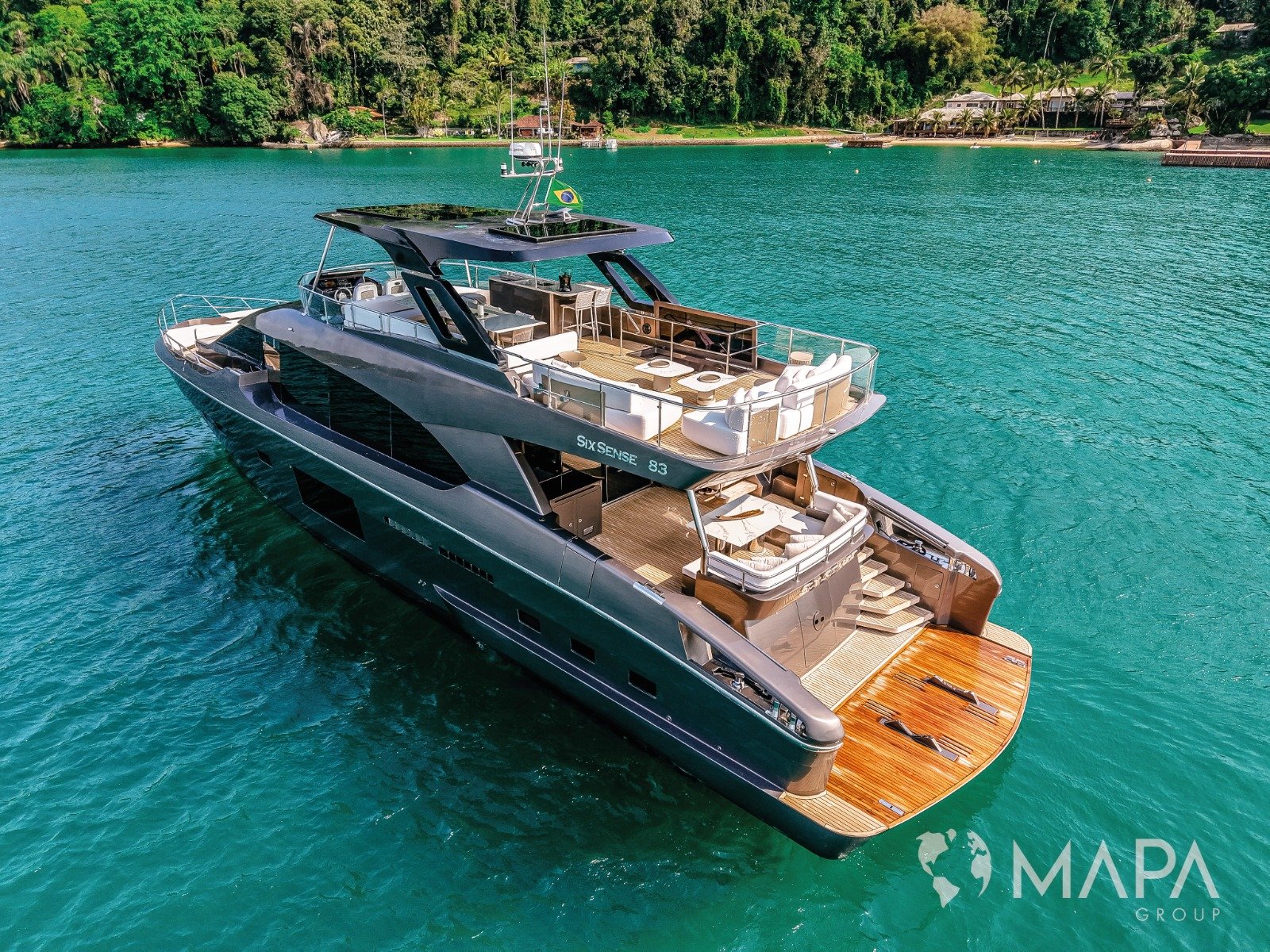
Day charter, Rio or Angra: US$1,400 to US$12,000 per day. Vessel, captain and crew. Provisioning, chef and water sports additional.
Overnight charter, Angra to Paraty: US$60,000 to US$100,000 per week. Larger vessel with cabins, crew and chef aboard.
For the detail on multi day charters through Ilha Grande, Angra dos Reis and Paraty, see our dedicated guide to overnight yacht charter in Brazil.

Dining and experiences
Michelin starred tasting menu, per person: US$120 to US$350. With pairing at the upper end. São Paulo now holds the only two three star restaurants in Latin America.
Private chef at the villa: In our experience, our private chefs generally quote per event, often including a customized, harmonized menu, with typical pricing in the range of US$250-400 per person, depending on the menu, service style, and level of personalization.
Carnival camarote, per person per night: From roughly US$450. Entry level across the principal camarotes. Private frisa positions inside the camarotes are quoted individually.

What Actually Changes Between Tiers
This is the question behind the question, and almost no published guide answers it. The hotels do not change much between a US$30,000 trip and an US$80,000 trip. Both are five star. What changes is the logistics, the privacy and the number of hours you spend travelling rather than experiencing.
Around US$30,000, ten nights, two people
Five star hotels throughout. Commercial domestic flights between destinations. Executive driver in each city. Private guiding on selected days. Michelin dining. One yacht day. Two destinations, possibly three if they are close.
What you do not have: helicopter transfers, a villa, a multi day charter, and roughly two full days that go into airports and roads instead of into the trip.
Around US$60,000, ten nights, two people
A villa with staff in the destination where you stay longest, five star hotels in the shorter segments. Helicopter on the legs where it saves half a day. Private guiding throughout. Chef at the villa. A two or three night yacht charter rather than a day out. One or two experiences that are not available through any public channel.
The accommodation is not dramatically better than the tier below. The trip is.
Around US$120,000 and above, ten to fourteen nights
Private aviation on every domestic leg. Exclusive villa buyout. Full week charter with crew and chef. Four destinations without losing a day to any of them. Access arranged through relationships rather than availability.
Merola's assessment: in our operational experience the steepest gain in value is the move from the first tier to the second, and it is almost entirely about time. According to Merola Luxury, clients who add roughly one third to the budget typically recover two full days of experience and remove every transfer that would otherwise have been the worst part of the trip. The move from the second tier to the third buys privacy and exclusivity rather than time, which is a different purchase and worth making for different reasons.
What Moves the Number
Group size, and it works in your favour. A villa sleeping eight costs roughly what three hotel suites cost, with a chef, a pool and no shared spaces. For couples the hotel usually wins. Somewhere around four to six people the villa becomes both better and cheaper per person.
Private versus commercial aviation. The largest single variable on any Brazil itinerary. On a fourteen night trip with four destinations, private aviation on the domestic legs adds meaningfully to the total and returns two to three full days.
Number of destinations. Each additional destination adds the transfer cost plus, on commercial routing, most of a day at each end. Four destinations in ten nights is usually a worse trip than three, regardless of budget.
Dates. Carnival, New Year and the Formula 1 weekend carry a holiday surcharge across the board. Accommodation typically runs two to three times normal rates and yacht charter around one and a half to two times. This is a genuine market condition, not an operator markup.
Length of stay. Fourteen nights does not cost forty percent more than ten if the destinations are the same, because the aviation is already paid for. Extending within a route is the cheapest way to add trip.
Trade-Offs, Quantified
If the number needs to come down, these are the levers in the order we would pull them, with what each one costs you.
Drop from four destinations to three. Saves the aviation leg and returns focus to the trip. Costs you a destination and nothing else. This is the first lever we recommend and the one clients resist most.
Move from a multi day charter to a day charter. Saves roughly US$8,000 to US$18,000 on a ten night trip. Costs you the nights at anchor, which is the part of the charter clients remember.
Move from private to commercial on a long domestic leg. Saves the charter cost. Costs most of a day per leg, plus the connection through São Paulo that most domestic routes require.
Trade the helicopter for a car on the Rio to Angra leg. Costs around four hours of road time on the round trip, in a car, at the start and end of what is otherwise the best segment of the itinerary.
Shift the dates outside a peak window. Saves the holiday surcharge on accommodation and charter, which on a Carnival or New Year trip is the largest single saving available. Costs you the event.
According to Merola Luxury, the lever clients almost always reach for first is accommodation, and it is the wrong one. Dropping a tier of hotel saves relatively little and is felt every single night. Dropping a destination saves considerably more and, in our experience, usually improves the trip.
How Brazil Compares
For an equivalent ten night trip at a comparable standard, for two people, excluding international airfare:
The more useful observation is not that Brazil is cheaper. It is that the composition is different. In the Maldives the accommodation is the trip and the number reflects that. In South Africa the guiding and the concession access carry the cost. In Brazil the accommodation and dining sit at genuine international standard while a larger share of the budget goes into movement, because the country is the size of a continent and the good things are far apart.
Merola's assessment: a client comparing Brazil to the Maldives on total cost is comparing two different products. According to Merola Luxury, the comparison that actually holds is with South Africa, because both are multi destination countries where aviation is structural rather than optional, and both reward a longer trip.
How Concierge and DMC Fees Work
Designing a private journey involves research, reservations, supplier coordination and support on the ground. How those services are priced varies with the operator, the itinerary and the level of work involved. A planning charge, an agreed service fee or a price that incorporates coordination may all be used in the market; none is a universal rule.
Mèrola does not apply a single DMC fee to every client. The commercial terms depend on the specific journey and the services requested. A short stay with a few reservations and a multi-destination itinerary with private transfers, a yacht and several specialist suppliers require different levels of coordination.
The useful question is what a proposal covers. Check which services and supplier costs are included, what is quoted separately, and which amounts could change with availability or new requests. Clear terms make it easier to compare the complete journey and understand what you are approving.
What You Are Actually Buying
Three things, and only one of them is on the invoice.
Access. The villa in Joá does not appear on any rental platform. The table at the restaurant that has been full for six weeks. The private frisa inside the camarote, which is not sold publicly. The World Cup winner who signs a jersey inside the Maracanã museum, which has no commercial channel at all. These exist through relationships built over a decade and they are not purchasable any other way.
Recovered time. On a fourteen night itinerary, the difference between well planned and badly planned domestic movement is two to three full days. For a traveller whose time has a number attached, that calculation usually makes itself.
Removed error. The villa in the wrong location. The Amazon segment booked in the wrong season. The Lençóis trip arranged for a month when the lagoons have evaporated. The Carnival enquiry that arrives ninety days out when the inventory closed at six months. These are expensive mistakes and they are made by capable people every year.
What Travellers Get Wrong About the Cost
Expecting South American pricing. Everyday costs in Brazil are low relative to North America and Europe. The luxury layer is not. Villas, charter, private aviation and top tier accommodation are priced against an international market and in some cases directly in dollars.
Underestimating domestic aviation. The most common and most expensive misconception. Brazil is larger than the continental United States and the commercial network routes almost everything through two hub airports. What looks like a short hop is frequently a full day.
Reading the exchange rate as a discount. A favourable rate genuinely helps on dining, guiding and ground transport. It moves the top tier components far less, because they are priced internationally.
Not budgeting for peak dates. Carnival, New Year and Formula 1 weekend carry a substantial holiday surcharge on accommodation and charter. Clients who plan around a normal week and then choose Carnival dates are surprised every time.
Forgetting the extras. Groceries alongside a villa chef, the Fernando de Noronha environmental charge and park fee, crew and lodge gratuities, and transfers that were assumed rather than quoted. Individually small, collectively material.
Frequently Asked Questions
How much should I budget for a luxury trip to Brazil?
For two travellers, excluding international airfare: roughly US$15,000 to US$25,000 for seven nights across two destinations, US$25,000 to US$50,000 for ten nights across three, and from US$50,000 for fourteen nights across four. Adding international private aviation, an exclusive villa buyout or a full week charter moves a fortnight past US$150,000. Merola Luxury quotes in ranges rather than fixed figures until group size, dates and route are known, because those three variables move the number more than the destinations do.
Where does the money go on a Brazil itinerary?
Roughly 30 to 40 percent to accommodation, 20 to 35 percent to domestic aviation and ground movement, and 20 to 30 percent to experiences, guiding and dining. Concierge and coordination costs depend on the itinerary and may be quoted separately or included in the proposed services; there is no standard Mèrola percentage. International airfare sits outside this. Merola's view is that the aviation line should always be visible in a proposal, because it is where the number actually moves.
What is the difference between a US$30,000 trip and a US$60,000 trip?
Very little of it is the hotel. Both tiers use five star properties. The difference is a villa with staff instead of hotel rooms, helicopter on the legs where it saves half a day, a multi night yacht charter instead of a day out, and access to one or two experiences that are not available through any public channel. In Merola's operational experience the additional budget mainly buys back two full days that would otherwise be spent in airports and on roads.
Is Brazil expensive compared with other luxury destinations?
For a comparable ten night trip Brazil sits below South Africa and well below the Maldives, and broadly level with Costa Rica, Argentina and Thailand. The more useful point is that the composition differs. In the Maldives the accommodation is the trip. In Brazil the accommodation and dining sit at international standard while a larger share of the budget goes into movement, because the country is continental in scale.
How do luxury concierge fees work?
Pricing varies by operator and by the work involved. Planning, coordination and supplier services may be priced in different ways or combined in a proposal. Mèrola does not apply one fixed DMC fee or percentage to every client. Ask what the quote includes, what is billed separately and which costs may change before the itinerary is confirmed.
Can I reduce the cost without ruining the trip?
Yes, and the order matters. Merola's recommendation is to drop a destination first, which saves the most and usually improves the itinerary. Then move from a multi night charter to a day charter. Then reconsider peak dates if the event is not the reason for the trip. The lever most clients reach for first is the hotel tier, and in our experience it is the wrong one: it saves relatively little and is felt every night.
Does the exchange rate make Brazil cheaper?
Partly. The real has traded roughly between 5.0 and 5.9 to the dollar over the past three years, and a half point swing moves locally priced components by around ten percent for a dollar buyer. It helps materially on dining, guiding and ground transport. It moves villas, charter and private aviation far less, because those are priced against an international market.
What is not included in a typical quote?
International airfare, unless specifically arranged. Groceries alongside a villa chef. The Fernando de Noronha environmental charge and national park fee. Gratuities for yacht crew and lodge staff. Mèrola itemises these separately rather than folding them into a total, so the number a client approves is the number they pay.
Request a Feasibility Review
The honest answer to what a trip costs is that it depends on four things: how many of you there are, when you are coming, how many places you want to see, and whether you would rather spend a day on a road or forty minutes in the air.
Tell us those four things and we will come back with a range, itemised, within forty eight hours. If the itinerary you have described does not fit the budget you have in mind, we will say so and show you which lever moves it, rather than quietly removing things you would have wanted.
Merola Luxury is headquartered in Rio de Janeiro and has designed itineraries for more than 2,500 international clients since 2016. Available on WhatsApp in English, Portuguese and Spanish.